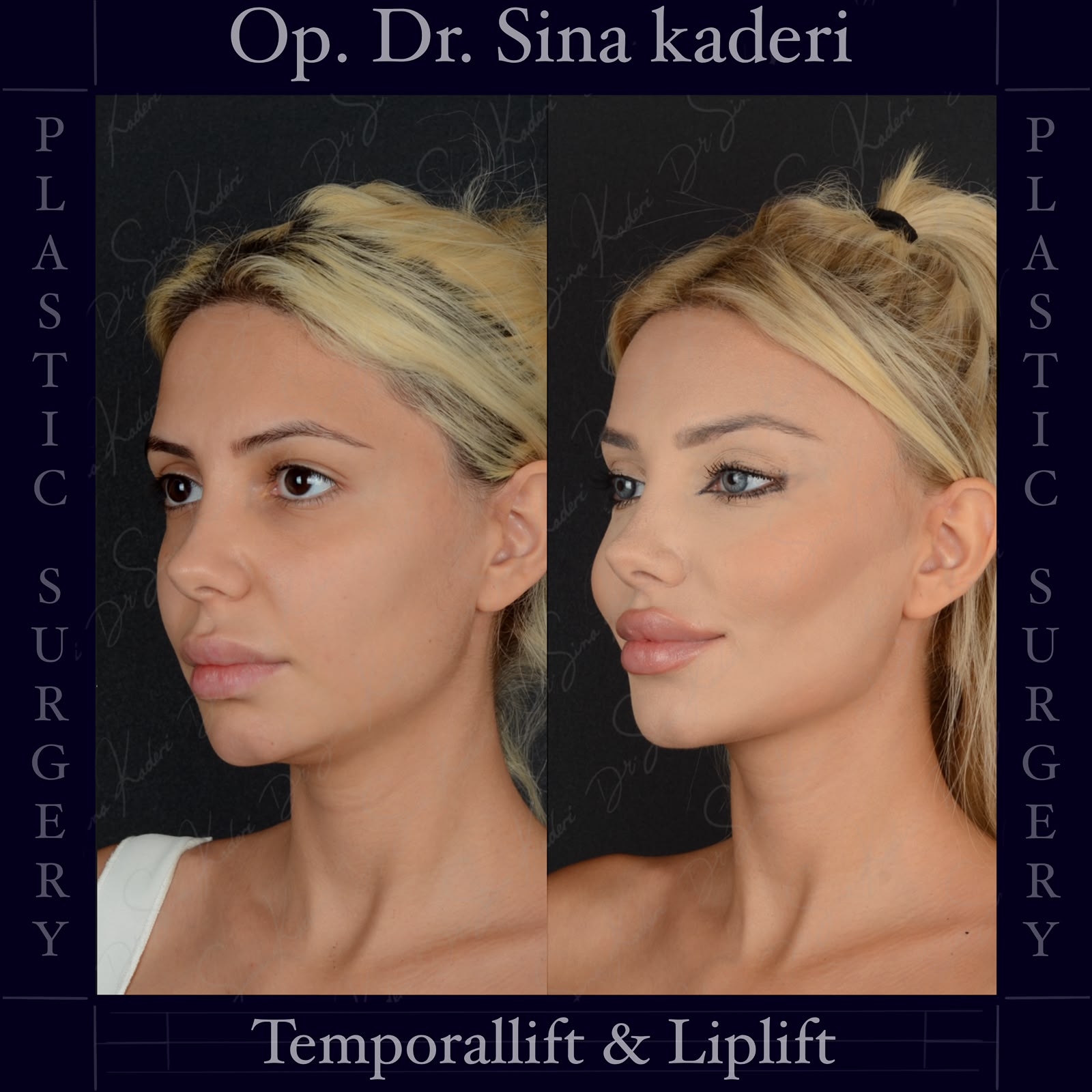
Temporal Lift Recovery Timeline and Postoperative Care Guide
Temporal Lift Recovery Time and Postoperative Care Guide
Recovery after Temporal Lift surgery varies depending on the surgical technique, the extent of dissection, and individual healing characteristics.
In an endoscopic Temporal Lift, the aim is to reposition the outer eyebrows, the area around the eyes, and the midface tissues. Therefore, postoperative swelling may occur not only in the temples but also around the eyes and cheekbones.
In general, most patients can return to their social activities within 7–14 days after Temporal Lift surgery. However, complete resolution of swelling, healing of deeper tissues, and stabilization of the final facial contours may take several months.
Temporal Lift Recovery Timeline
Days 1–3: Swelling and Initial Recovery
The first 48–72 hours after surgery are typically when swelling is most noticeable.
Swelling may occur around the temples, upper and lower eyelids, and midface. Some patients may also experience mild bruising, scalp tenderness, temporary numbness, or a sensation of tightness.
During this early stage, the outer corners of the eyes and eyebrows may appear more elevated than expected. This appearance should not be considered the final surgical result.
Keeping the head elevated and getting adequate rest are particularly important during the first few days.
Days 4–7: Swelling Begins to Decrease
During the second half of the first week, swelling generally begins to subside.
As the swelling around the eyes decreases, the new facial contours gradually become more visible. Most patients can resume light daily activities and short walks during this period.
However, tightness and tenderness around the temples may persist. Although the initial changes in facial appearance become noticeable, the healing process is still ongoing.
Days 7–14: Returning to Work and Social Activities
The second week is typically when most patients begin returning to their normal social routines.
A significant portion of the swelling and bruising usually resolves during this period. Patients with desk-based jobs can often return to work within 7–14 days, depending on their individual recovery.
Patients whose jobs involve physical activity may require additional recovery time.
Mild swelling, sensitivity around the temples, and temporary scalp numbness may still be present.
Weeks 3–4: A More Natural Appearance
By the third and fourth weeks, swelling has usually decreased considerably, and the face begins to look more natural.
The new contours of the outer eyebrows, lateral eye area, and midface become easier to evaluate.
Most patients can resume the majority of their daily activities. However, deeper tissues are still healing, so strenuous activities should be approached cautiously.
Months 1–3: Tissue Adaptation
During the first three months, residual swelling and tissue firmness gradually decrease.
The initially elevated or tight appearance may soften as the tissues adapt to their new positions.
Temporary numbness, tingling, or sensitivity around the temples typically improves over time, although sensory recovery may take longer in some patients.
Months 3–6: Stabilization of Results
The results of Temporal Lift surgery generally become more stable during this period.
As swelling continues to resolve and deeper tissues heal, the facial contours gradually settle into a more natural appearance.
In most patients, the aesthetic results can be evaluated more reliably within 3–6 months after surgery.
Some aspects of tissue healing and scar maturation may continue beyond six months.
Temporal Lift Recovery Timeline at a Glance
Recovery stageEstimated timeline
Peak swelling | First 2–3 days
Significant reduction in swelling | 7–14 days
Return to social activities and desk work | 7–14 days
More natural facial appearance | 3–4 weeks
Most residual swelling resolves | 1–3 months
Results become more stable | 3–6 months
These timelines are general estimates. Recovery may vary depending on individual healing characteristics and the extent of surgery.
Postoperative Care After Temporal Lift Surgery
Proper postoperative care is essential for supporting wound healing, managing swelling, and reducing the risk of complications.
1. Sleeping Position
For the first 1–2 weeks, patients are generally advised to sleep with their heads elevated approximately 30–45 degrees.
Sleeping on the back is recommended to avoid pressure on the temples and sides of the face.
A U-shaped neck pillow may help prevent the head from turning during sleep.
Sleeping face down should be avoided during the early recovery period.
2. Swelling Management
Swelling after Temporal Lift surgery usually reaches its peak within the first 48–72 hours.
Keeping the head elevated, avoiding strenuous activities, and limiting exposure to excessive heat may help minimize postoperative swelling.
Ice packs or cold compresses should not be applied directly to the surgical area unless specifically recommended by the surgeon.
3. Hair Washing and Incision Care
In endoscopic Temporal Lift surgery, incisions are typically placed within the scalp, where they are concealed by the hair.
Hair washing can usually resume once approved by the surgeon.
Patients should use lukewarm water and gentle movements while avoiding rubbing, scratching, or applying pressure to the incision sites.
Hair coloring and chemical hair treatments should be postponed until the incisions have healed sufficiently and the surgeon has approved these activities.
4. Physical Activity and Exercise
Light walking is generally encouraged during the early postoperative period.
However, heavy lifting, intense exercise, strenuous bending, and activities that significantly increase pressure in the head and face should be avoided.
Returning to running, fitness training, and weightlifting is usually considered around 4–6 weeks after surgery, depending on the healing process and the surgeon's assessment.
5. Facial Massage and Skincare
During the first weeks after surgery, facial massages that apply pressure to the temples or midface should be avoided.
If considered appropriate by the surgeon, gentle massage may be introduced from approximately the second postoperative week.
However, facial massage is not necessary for every patient. Its timing, direction, and intensity should be determined according to the surgical technique and individual healing process.
6. Heat Exposure and Sun Protection
Saunas, steam rooms, hot baths, and excessively hot showers should be avoided during the early healing period.
Exposure to excessive heat may increase swelling and sensitivity.
Sun protection is also important. Healing incisions should be protected from direct sunlight, and appropriate sun protection measures should be used.
7. Smoking, Alcohol, and Nutrition
Smoking and other nicotine products can negatively affect blood circulation and delay wound healing.
Patients are strongly advised to avoid nicotine use before and after surgery.
Alcohol should also be avoided during the early recovery period, particularly because of potential interactions with prescribed medications.
A balanced diet, adequate protein intake, and proper hydration support tissue healing.
8. Medications and Follow-Up Appointments
Prescribed medications should be taken according to the surgeon's instructions.
Patients should avoid taking medications or supplements that may increase bleeding risk without medical approval. Regularly prescribed medications should not be discontinued without consulting the treating physician.
Attending scheduled follow-up appointments is important for monitoring incision healing and evaluating recovery.
When Should You Contact Your Surgeon?
Mild swelling, bruising, tightness, and tenderness are common during the early recovery period.
However, certain symptoms may indicate a complication and require prompt medical evaluation.
Patients should contact their surgical team if they experience sudden or rapidly increasing swelling, particularly on one side, worsening pain, fever, significant redness, unusual discharge from the incision sites, or newly developed weakness in facial movements.
Visual disturbances, double vision, loss of vision, or severe eye pain require urgent medical assessment.
Frequently Asked Questions About Temporal Lift Recovery
How long does swelling last after Temporal Lift surgery?
Swelling is usually most noticeable during the first 48–72 hours. It decreases significantly within 7–14 days in most patients, although mild residual swelling may persist for several weeks or longer.
When can I return to work after a Temporal Lift?
Patients with desk-based jobs can generally return to work within 7–14 days. Those with physically demanding occupations may need additional recovery time.
When can I exercise after Temporal Lift surgery?
Light walking can usually begin during the early recovery period. More strenuous exercise and weight training can typically resume after 4–6 weeks, with the surgeon's approval.
When will my eyes look natural after a Temporal Lift?
During the early healing period, swelling and tissue tension may make the outer corners of the eyes appear more elevated.
As swelling subsides and the tissues soften, the appearance gradually becomes more natural. The final result can generally be assessed more reliably after 3–6 months.
When can I wash my hair after Temporal Lift surgery?
The appropriate timing depends on the condition of the scalp incisions and the closure technique used. Gentle hair washing can resume once approved by the surgeon.
How long does complete Temporal Lift recovery take?
While social recovery typically takes 1–2 weeks, deeper tissue healing and stabilization of the aesthetic results continue for several months.
Conclusion
Most patients can return to their normal social activities within 7–14 days after Temporal Lift surgery. The majority of visible swelling decreases within the first few weeks, while the facial contours continue to settle over the following months.
The final aesthetic results generally become more stable within 3–6 months.
Maintaining an appropriate sleeping position, protecting the surgical incisions, gradually returning to physical activities, and following postoperative instructions can support a smoother recovery.
Because every patient has unique anatomical characteristics and healing patterns, postoperative care should always be individualized.
Dr. Sina Kaderi
Plastic, Reconstructive and Aesthetic Surgeon
Istanbul, Türkiye
This article is intended for general educational purposes only. Individual recovery timelines and postoperative care instructions may vary. Always follow the recommendations provided by your surgeon.